
In partnership with
WWF

In partnership with
WWF
Revitalization of the Danube floodplain in the Gârla Mare area: ecological restoration of 400 hectares, a natural refuge for biodiversity


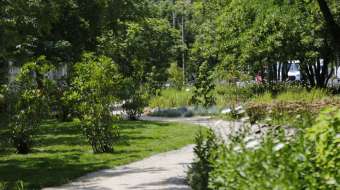
The ecological restoration project in the Gârla Mare-Vrata area, Mehedinți, developed by WWF-Romania with funding from the Coca-Cola Foundation through the "Together for the Danube" program, is bringing 400 hectares of floodplain back to life and restoring the natural connection of this unique region to the Danube River. This miniature "delta" in southwestern Romania has thus become an essential habitat for over 80 species, including some that are vulnerable (the pygmy cormorant), near threatened (red-crested pochard, otter, lake turtle) or endangered (ground squirrel), while also providing opportunities for the socio-economic development of the area, such as fishing and ecotourism.

The ecological restoration project in the Gârla Mare-Vrata area, Mehedinți, developed by WWF-Romania with funding from the Coca-Cola Foundation through the "Together for the Danube" program, is bringing 400 hectares of floodplain back to life and restoring the natural connection of this unique region to the Danube River. This miniature "delta" in southwestern Romania has thus become an essential habitat for over 80 species, including some that are vulnerable (the pygmy cormorant), near threatened (red-crested pochard, otter, lake turtle) or endangered (ground squirrel), while also providing opportunities for the socio-economic development of the area, such as fishing and ecotourism.
As part of the works, the banks of the transverse canal were reinforced and raised to facilitate water circulation in the area, new water bodies were created to diversify habitats, a fishing spot was set up for the local community, and the dykes were reinforced to store a larger volume of water. The project provides for the storage of 5 million m³ of water in case of floods, reducing the risk of flooding in downstream localities.
The restoration supports local resources and opens up new prospects for ecotourism and fisheries development. The project is part of a larger program implemented in six countries: Romania, Austria, Hungary, Croatia, Serbia, and Bulgaria, with the aim of restoring wetlands and vital ecosystems along the Danube, protecting biodiversity, and contributing to the local economy.