
In partnership with
SOR

In partnership with
SOR
Ecological transformation and nature conservation: Sticlăriei Park in Bucharest, a model of urban biodiversity


The nature conservation project in Sticlăriei Park, funded by the Coca-Cola Foundation and implemented by SOR – Societatea Ornitologica Romana (Romanian Ornithological Society), preserves existing habitats and introduces elements to support biodiversity. These elements include planting native tree and shrub species, installing birdhouses, and creating an area of herbaceous vegetation for pollinators.
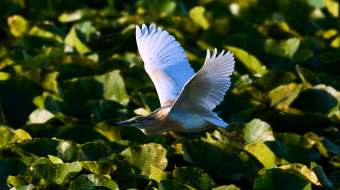
Sticlăriei Park in Pantelimon was formed on the site of a sand quarry, once used by a glass factory. After the quarry closed, the sunken land, with its lake and central island, was designated as a park. In the 1990s, the area was abandoned, and nature began to reclaim the land, forming diverse habitats and attracting numerous species. Today, the park has been revitalized as an urban oasis, preserving biodiversity and becoming a space for reconnecting with nature.

The nature conservation project in Sticlăriei Park, funded by the Coca-Cola Foundation and implemented by SOR – Societatea Ornitologica Romana (Romanian Ornithological Society), preserves existing habitats and introduces elements to support biodiversity. These elements include planting native tree and shrub species, installing birdhouses, and creating an area of herbaceous vegetation for pollinators.
Sticlăriei Park in Pantelimon was formed on the site of a sand quarry, once used by a glass factory. After the quarry closed, the sunken land, with its lake and central island, was designated as a park. In the 1990s, the area was abandoned, and nature began to reclaim the land, forming diverse habitats and attracting numerous species. Today, the park has been revitalized as an urban oasis, preserving biodiversity and becoming a space for reconnecting with nature.
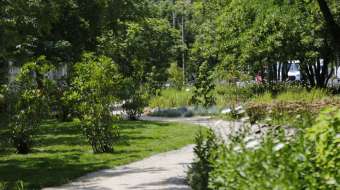
Work in the park includes the installation of gravel paths, eco-friendly public lighting, and a new bridge for improved access. The team of biologists and environmental specialists planted various native plant species, added birdhouses, and created areas with dead wood to support invertebrate and fungal ecosystems, thus promoting their role in the forest life cycle.
In addition, to stabilize the banks and improve water quality, the reed bed area—a crucial habitat for water filtration and biodiversity enhancement—was expanded.
The project offers a series of educational activities, with demonstration sessions for local schoolchildren, where they will discover the importance of ecosystems.